
IIntroduction: Recognition and the Problem of Interpretation
Women in films are not always ignored or made invisible. Rather, they are scrutinized and described. But before they get the chance to define themselves, women are critiqued by characters or the audiences as to who they are, what do they want, and what they are supposed to become. For instance, women are critiqued as either being selfless or selfish in the context of marriage. Although these critiques are seemingly observations, they become part of the self-discovery process for women. Ultimately, women are defined by audiences as much as they are defined by these critiques.
This creates an interesting question: how can we distinguish between an interpretation that recognizes another person and one controls them? Interpretation itself is not necessarily harmful. Because part of our identity develops through relationships, other people may notice qualities that we have not yet recognized in ourselves.1 Their understanding can help us reconsider who we are and who we may become, making a more complete picture of ourselves. However, interpretation turns into misrecognition when one person is not allowed to answer, revise, or reject that of the other person. Therefore, the real problem is not whether interpretation should exist, but whether the person being interpreted can still participate in shaping its meaning.
To clarify the problem, I will introduce three related concepts: interpretation, misrecognition, and recognition, and I will define them. Interpretation is making a generalized understanding of the identity and experiences of others, as well as guessing their possible futures. Interpretation can be neutral as there is no right answer when making conclusions, and judging others is a constant in all relationships. Misrecognition occurs when an interpretation denies the person being interpreted the ability to answer, challenge, or revise what is said about her. Misrecognition is most harmful when the subject, the person being interpreted, has no power to contest the interpretation, when everything the subject says is taking away from her and used to argue against her, and when there is an extremely narrow representation of the subject. Recognition, does not mean the truth of who regards someone as they really are. Recognition inverts misrecognition in that it regards the subject as a forming participant of the process. Recognition will always allow the subject to engage as an active participant, and can manifest through acceptance of the interpretation, revising the interpretation, and contesting the interpretation.
Cinema contributes to this issue. The audience does not get to view or understand the character’s interpretations objectively. The cinema decides for us who/what/when we see and hear certain characters as well as which scenes are important. The cinema also decides the ending of the story. In Gaslight, we see the lights dim and hear the sounds that Gregory claims do not exist, so the film supports Paula’s experience before she finally ensures her perception. Similarly, a performance, an edit, a change in perspective, etc. can make one understanding of a woman seem more real than others. Cinema is therefore not only showing us how characters perceive her, but how it perceives her as well.
Because of this, cinema can be seen as a third interpreter. The first is the character making a judgment about another character. The second is the character who either accepts, denies, or modifies that judgment. The third is the film itself, and makes the audience believe some judgments more than others.
In Gaslight, The Philadelphia Story, and Little Women,2 the demand for recognition varies. In Gaslight, she must first be treated as if someone could trust her and therefore as if someone would care to listen to her talk about her experiences. In The Philadelphia Story, the question is whether someone else’s judgment about relationships would help her improve as a person, or would help her fill the gaps in her understanding of herself, as opposed to replacing it. In Little Women, the relationships offer a positive example and show a greater extent to which a woman deserves control over the pathways of her own future. Overall, the recognition in these films is the authority to trust one’s experiences, the right to modify one’s identity through relationships, and the right to participate in directing the pathways of one’s future. As a third interpreter of this reality, cinema provides or denies support to these criteria in the name of offering a reason, a framework for judgment, and deciding the degree to which a woman’s identity is open or fixed.
IIGaslight: Recognition and the Authority of Experience
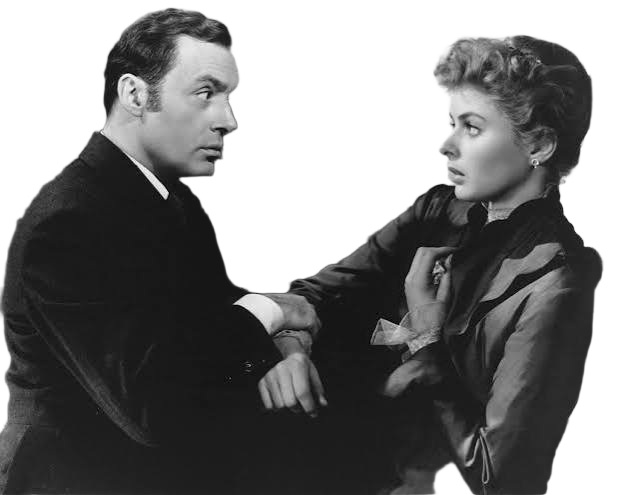
Gaslight shows the most obvious and standard form of misrecognition. Gregory does not simply misunderstand Paula. He creates a system in which she is no longer allowed to be regarded as a reliable interpreter of anything, including her own mind.
At first, many of Gregory’s actions are small. For example, an object disappears, and he tells Paula that she must have moved it. When she hears footsteps above the ceiling, he acts as if there isn’t any sound. The gaslights become dimmer, yet no one around her agrees with her about the change. Gregory repeatedly says that she is forgetful and unstable.
Unfortunately, Paula cannot reject Gregory’s interpretation. If she says she remembers something, he would say that her memory was unreliable; if she insists that she heard a sound, this insistence would become evidence of her nervous condition; if she becomes emotionally fragile because no one believes her, she is kept at home because of her “mental problem.” In this way, every attempt Paula makes to defend herself is turned into further proof that Gregory is right.
More importantly, Gregory does not only misinterpret Paula’s experiences; he removes her authority to interpret experience at all, including her own experience.
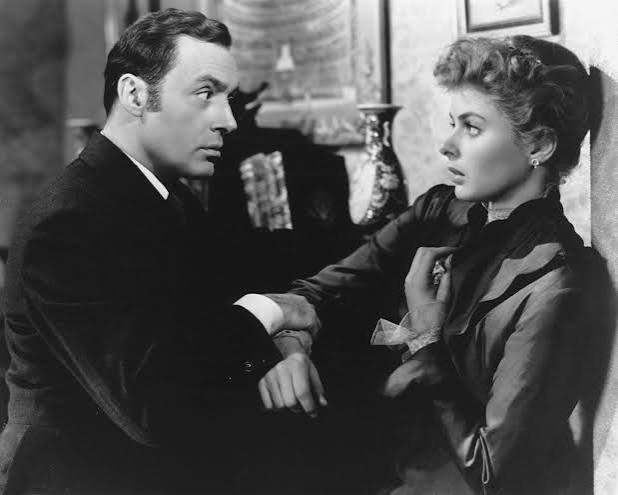
This loss of authority gradually changes Paula’s identity. At the beginning, she may be uncertain about particular events, but eventually she becomes uncertain about herself. She becomes to rely on others like Gregory to explain everything to her, and she comes incapable of behaving normally in public. When she loses trust in her own sense, she also loses the confidence to act her own. Gregory finally becomes the person who defines Paula’s reality and therefore defines her.
The film, however, creates a distinction between Gregory’s interpretation and the audience’s experience. Gregory denies the changes in the gaslight, but the film allows us to see them. Paula hears movement above her, and the soundtrack allows us to hear it too. Though Gregory controls the context of what happens, the cinematic form allows the audience to gradually understand that Paula’s perception is based on reality.
In a way, the film supports Paula before a detective does, and before the other characters start to believe her. So, the film provides Paula with a kind of acknowledgment that her husband will not, and that the bystanders will not. It validates her.
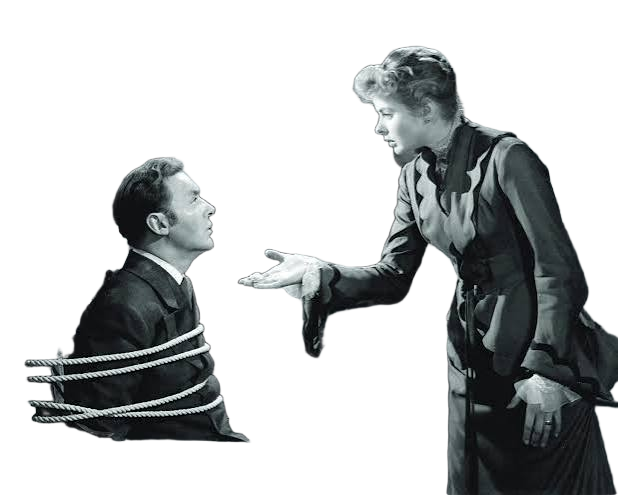
Also important is the last confrontation. Paula does not only learn that she was right, she gets back her ability to make judgments. Ironically, she is the one that Gregory needs help from, since he tries to convince her that she is reasonable enough to help him. While Paula’s reaction seems confusing and ironic, it is actually a sign that their relationship has changed in regards to interpretation. She is not begging Gregory to figure out what is real once again. She knows him and the threat, and decides for herself.
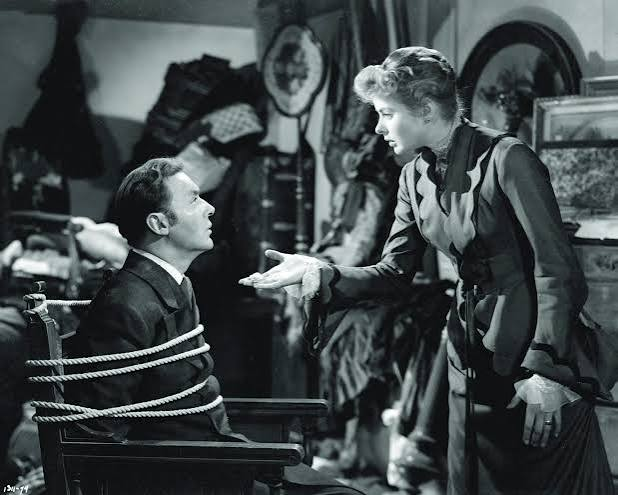
Gaslight presents epistemic authority as the first condition of recognition, meaning Paula has a right to her perceptions and the knowledge that comes with possessing them. Paula is not able to recognize herself until her perceptions are given value. Gaslight shows us the first condition of recognition. To be recognized, one’s perceptions and judgments must be acknowledged.
However, being believed and recognized is not the end. The Philadelphia Story shows a situation that is more complicated. Tracy is not Paula’s situation, as she is able to defend and express herself and more importantly, recognize and judge her limitations. However, the situation is not that simple. If someone’s Judgment is correct and, while doing so, recognizes the other’s limitations, how can that be done without assuming control over the identity being formed?
IIIThe Philadelphia Story: Recognition Through Relational Revision
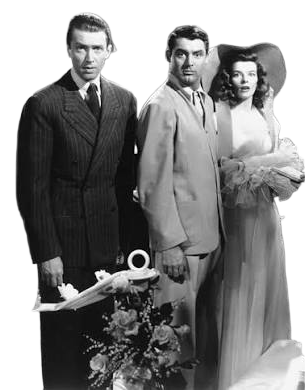
Unlike Paula, Tracy Lord is not depicted as having one dominating interpreter. Rather, she is shown as having multiple people around her who portray her in different lights.
To the public and to the few reporters who manage to enter her house, Tracy is nothing more than a rich socialite. To George, her fiancé, she is almost the ideal woman, elegant, pure, and above the average. Mike perceives her through the sketch of the heiress, and then, starts to see her in a romantic light. Tracy’s former husband, Dexter, sees her as the strong and intelligent woman she is, but thinks too highly of herself and is too proud to recognize the weakness in others. Tracy is also aware of how she perceives herself and how she would like others to perceive her.
So, the movie is not about the conflict of truth and deception. Rather, it is the contest of perceptions. The main interest is not in the question of who has the right perception of Tracy, but in the question of which perceptions of Tracy allow her to participate actively in her own self-realization.
George’s description of Tracy as a goddess is, in a way, placing her on a pedestal, and in a way, an act of mistaking her, as he is not allowing her the right to be a work in progress.
A goddess is not allowed to be fallible. A goddess also is not allowed to become confused, wishy washy, or show her vulnerabilities that contradict the goddess image. George therefore places Tracy in an image that is a portrayal of himself, rather than a portrayal of Tracy as a complex person.
Acknowledging misrecognition in these scenarios is beneficial because compliments can be a form of misrecognition just as insults can. Praise George’s reliance on idealization is a way to place restrictions on the number of selves Tracy is able to take.
Dexter is more complex to analyze. Just like George, Dexter has a negative opinion of Tracy, and thinks she is cold and inflexible, and that she even lacks the ability to forgive people for being weak. Challenging her is something he enjoys doing, which seems very similar to what George does in order to confine her in a way and draw the boundary, but in Dexter’s case, it’s fundamentally different.
Unlike Gregory’s interpretation of Paula, Dexter’s understanding of Tracy remains open to her response. Tracy can argue with him, reject his judgment, and decide whether any part of it belongs in her own self-understanding. While their exchange is not equal in all ways, it is still an exchange. Dexter’s take on Tracy is still grounded in the fact that her opinion matters, and he is not engaging in arguments just to demonstrate that her ability to rationalize is fundamentally lacking. Therefore, his take is somewhat valid.
More crucially, Tracy later acknowledges at least some of what he perceives in her. She does not acquiesce to his portrayal. Her nighttime experiences, especially the moments when her systematically cultivated public persona begins to relax, enable her to perceive herself in new and different ways. She becomes increasingly less sure that strength means the capacity to not need others and that moral seriousness equates to the unrelenting moral judgment of others.
The issue is not with whether Dexter is right, and Tracy is wrong. The issue is with whether his perspective is going to be seen as a part of a change that Tracy is willing to accept as her own.
This perspective of recognition suggests a second relational revision. Other people may help us see parts of ourselves that we have ignored, but their interpretations cannot simply replace our own understanding. We must be able to respond to them, test them against our experience, and decide whether they belong in the person we want to become.
Tracy’s transformation is therefore not written by Dexter alone. It develops through her encounters with George, Mike, Dexter, and her own unexpected behavior during the night. These relationships offer competing interpretations of her, but Tracy must still decide which of them she recognizes as part of herself.
Tracy’s socially and emotionally unembellished performance at the start of the film exemplifies this relational change process. Tracy appears distanced, and her social role creation is evidence of her desire to maintain her social role of unforgiveness. Tracy is socially fragmented and unforgiving towards any relational disruptions to her social role of being distanced.
In later scenes, particularly once drinking starts, her body appears to lose control. Her voice shifts, movements are looser, and reactions are more impulsive, less inhibited. Describing drunk Tracy as the “real Tracy” is an oversimplification. This, too, would be a singular, absolute interpretation. What is important here is that Tracy comes into contact with a previously inaccessible part of herself, that is, an alternative version that had been previously unaccepted in her self-image.
The portrayal Tracy’s performance illustrates that self-identity is not a constant abstract that is concealable. Rather, self-identity can emerge from as yet not fully explored actions and relationships.
The film’s construction of Tracy’s development also is problematic. The presentation of her increased openness, tolerance, and emotional availability as an enhancement of Tracy’s character is valid to an extent, as she is ultimately more positive and more connected to her peers. But the film risks suggesting that Tracy becomes more fully human only when she becomes softer, more forgiving, and more suitable for marriage.
The wedding ending exemplifies this tension. Firstly, Tracy actively chooses Dexter instead of continuing with George. She sees George’s idealization of her would mean that she lives as a simple person. Tracy also sees that she has been overly controlling, and therefore, the marriage can mean that both people in the marriage can be comfortable with the fact that they know each other’s shortcomings.
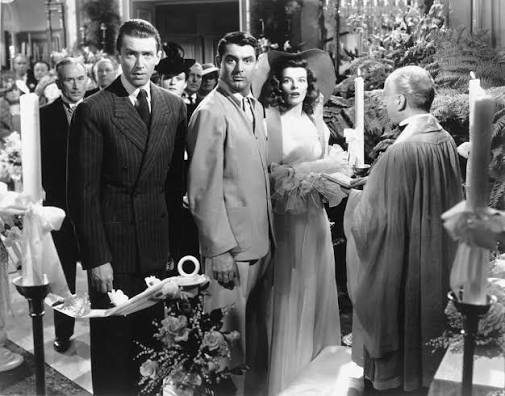
At the same time, the wedding becomes the film’s final proof that Tracy has grown. Her development is confirmed through her return to marriage, which risks narrowing her transformation into the role of a “better” wife. The film, thus, frees Tracy from the goddess role, but almost immediately, places her in the corrected wife role.
This ambiguity shows the brilliance of The Philadelphia Story. There is almost no instance of pure recognition or misrecognition in the film. Instead, the film shows the hurdles to recognition through relationships. There can be a person, or even spouses, who can know and relate to. Nevertheless, the recognition must be valid, and there must be the freedom to challenge and/or alter the recognition for the purpose of expanding one’s life.
Recognition is more flexible here than in Gaslight. In that film, recognition is almost exclusively predicated on belief. In this instance, the recognition of Tracy and the other voices is more important and, therefore, more flexible.
Even if Tracy engages with her transformation, the movie depicts it with a clear finality. The marriage ending contains the transformation. Little Women takes the question one step further. It prompts the question of whether a woman can exist without being completed. It asks whether a film can show her evolving with relationships and be free to suggest different possibilities.
IVLittle Women: Recognition and the Openness of the Future
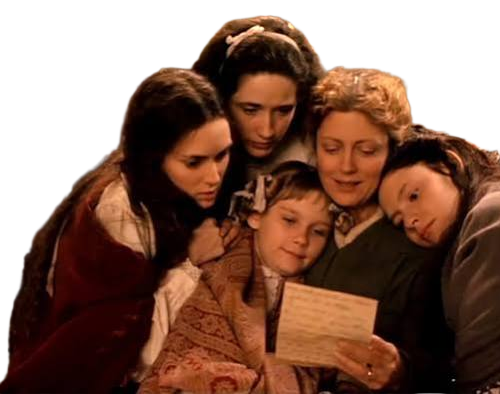
Greta Gerwig’s Little Women provides Jo with a better model of recognition because, without relying on Jo’s one final identity, the model allows Jo to be influenced by other people as well.
Oppositional terms are how most people understand Jo. She is the independent one, not the romantic one. She is the writer, not the wife. She is the ambitious one, not the feminine one. The film, however, forces these oppositional terms to be blurred. Freedom, for Jo, is not the absence of loneliness. The absence of bondage is not the absence of the desire for closeness. The memories and relationships that fuel her writing are the memories and relationships of her family. The Jo character can’t be defined by a singular identity.
Marmee is an excellent example of a recognizing character. Marmee doesn’t deny Jo’s anger, nor does she see it as evidence of Jo’s innate evil. And contrary to popular belief, instead of dismissing Jo’s anger or leaving her to manage it alone, Marmee shares her own experience of anger.
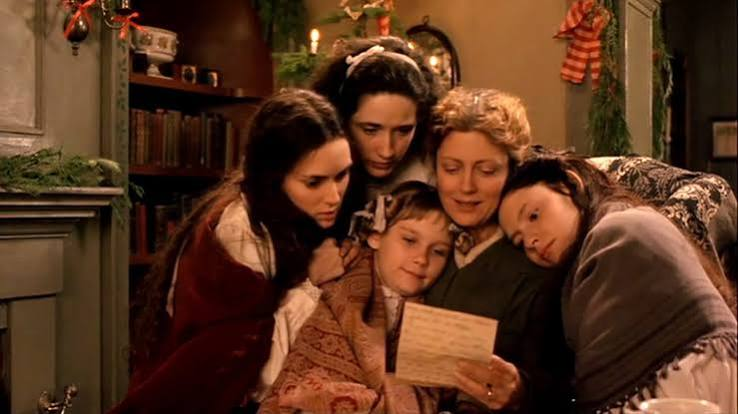
Marmee’s answer is important for two reasons. One, Jo is neither stuck with the identity of “angry girl,” nor is it declared what Jo must become. Managing this anger becomes a resource for Jo, not a command.
Good recognition allows for self-definition. This is done by providing language and experience.
Marmee’s response highlights how self-knowledge requires others. Jo lacked full understanding of her mother because Jo understood that her mother’s exterior calmness conceal struggles. Jo and Marmee have both their struggles expanded by the common understanding that recognition is reciprocal.
Jo’s sense of self is the product of a web of relationships. Intricate familial relationships with Amy force Jo to foster a sense of balance with competitive feelings, and the frustration of recognizing the limits of women’s choices. The dynamic Beth creates with Jo and her eventual absence completely alters Jo’s sense of home and memories. Jo sees the limits of the emotional intimacy Laurie offers and the future he wants. Jo’s writing gets tangled with a publisher’s commercial interests, and her sisters’ choices highlight that multiple paths of self-determination exist for women.
Jo is not just restricted by her relationships. Rather, they provide her with materials to write and to know herself. Escaping influence is not what gives Jo her agency. It is her active participation in the processes of interpretation and transformation of these influences. This is called relational self-authorship. This means Jo participates in creating her self together with others. Relationships, memories, social demands, and evaluations of others are part of the process of telling her self.3
This idea requires the use of nonlinear editing in the film. Jo’s life is not presented as one long line from childhood to adulthood. Instead, the film jumps back and forth in time. The film repeatedly places the sisters’ joyful childhood beside scenes of adult distance and loss. Jo’s earlier confidence in independence is therefore viewed together with her later loneliness. Amy’s childhood frustration is reinterpreted with her adult understanding of money, marriage, and women’s limited economic options.
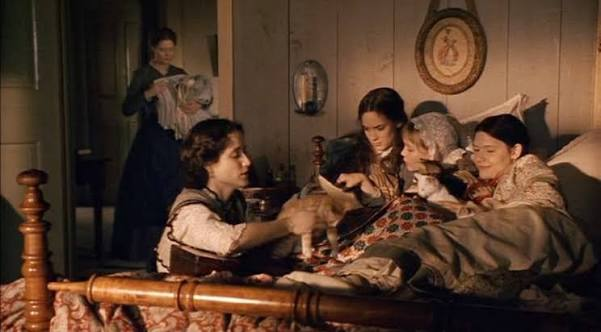
The editing, therefore, performs a kind of recognition. It allows the audience to understand Jo through several times and relationships. Her present does not erase her past, and her past does not completely determine her future.
The ultimate conclusion of the film takes the idea of “openness” even further than before. In one of the endings, Jo receives a romantic reunion with Professor Bhaer. This follows the pattern of the publisher, who suggests that the heroine always marries. In one of the endings, though, Jo observes the printing, binding, and completing of her book. The film leaves the status of the romantic ending uncertain.
The obfuscation is not a trick. It prevents both the marriage and the writing of the book from becoming definitive. The endings contain both the marriage and the negotiation of the marriage, which is Jo’s authorship. Jo is a woman who desires love and has a practical view, and a writer who desires love and has a practical view.
The film does not claim that Jo has a lot of freedom. Jo occurs in a world where a woman’s life must end in a marriage. Her authorship therefore develops within social and commercial constraints rather than outside them. The film chooses to show the constraints, instead of showing the marriage as the inevitable conclusion.
This is where the film shows the improvement in Jo’s authorship. Marmee, her sisters, Laurie, and the publishing world all shape Jo, but no one person can explain Jo completely. The film shows multiple potential outcomes of Jo’s authorship. The film ends without completely closing the question of Jo’s authorship.
The differences among the three films has become clearer. Paula must first re-establish the power to trust her intuition. Tracy must learn how to adapt herself to the people around her, winning, without relegating herself to becoming someone else’s invention. Jo must learn how to allow herself to be influenced, to an extent, without closing off the other possibilities of the future.
These phases move from voice, to dialogue, to possibility. Yet this progression is not available to the audience independently of form: cinema makes recognition perceptible by deciding what is seen, heard, repeated, withheld, and finally closed. The films do not merely record recognition; their audiovisual organization shapes how recognition is experienced.
VCinema as the Third Interpreter
Characters interpret one another, but cinema also interprets the act of interpretation itself.
Cinema is not the only medium that interprets. Literature can privilege a narrator’s language, and video games can frame a player’s choices. What is distinctive about cinema is the way it fixes and synchronizes visual and auditory evidence for a spectator. The camera selects a field of vision; editing controls sequence and duration; performance gives an interpretation a body and voice; and sound can confirm or contradict what a character says. Unlike prose, which usually asks readers to construct these sensory details through language, and unlike games, which can allow players to intervene in or test alternative outcomes, film ordinarily presents a completed audiovisual sequence that viewers cannot alter. Its “third interpretation” therefore arrives not only as an argument about a character, but as a perceptual arrangement through which that character is encountered.
A movie is allowed to portray multiple perspectives concerning a woman, but they are not given the same level of importance.4 By choosing whose face remains in frame, which reaction receives a cut, what sound accompanies a judgment, and where the story ends, a film directs viewers to specific conclusions and away from others. The third interpreter is therefore not simply another voice in the story; it is also the formal system that arranges the audience’s access to every voice.
Through epistemic alignment, interpretive framing, and narrative closure, Gaslight, The Philadelphia Story, and Little Women show three ways in which cinema becomes this third interpreter.
1 Epistemic Alignment: Whose Experience Counts as Evidence?
Alignment concerns how a film controls viewers’ access to a character’s actions, knowledge, and subjective experience.
In Gaslight, the audience notices the lights dimming and the sounds changing. In the case of Paula, the formal choices of the filmmaking give her experience weight, even when everyone around her denies it. The film doesn’t just show us that Gregory is dishonest. It shows us the distance between Paula’s reality and the way Gregory interprets her reality.
This is important because the process of recognizing something can start long before someone has actually said, “I believe you.” The film extends the belief to Paula through its elements of sound, light, and space.
In The Philadelphia Story, the alignment is much less direct. The audience is not placed inside Tracy’s point of view. Instead, the audience is placed among the many interpretations of Tracy. Because of this, the film still guides us. We see that George’s image of worship for Tracy is becoming a rigid image, while Dexter is offering more witty and confident critique of Tracy. Because of this, Tracy’s image of her self-control invites us to see her self-control as an image of the self that is incomplete.
In Little Women, the audience gets a sense of Jo’s feelings in the present through past Jo via the use of a nonlinear editing style. The audience is able to interpret the deeper meaning of Jo’s present feelings of isolation and Jo’s less Strong and more caring and tender feelings for her family. Throughout the film Jo’s present experiences are held to a standard of sometimes a lifetime encapsulated in a single utterance.
Therefore, in cinema, credibility can be organized perceptually. A film can let viewers see the gaslight dim, hear the footsteps, remain outside a character’s field of vision, or return to a memory through editing. Literature can describe comparable evidence, but cinema can synchronize image, sound, performance, and duration so that the audience encounters a character’s perception as an event unfolding before them. Recognition in film therefore begins with how the medium distributes perceptual credibility: whose experience is made available as evidence, and whose is kept at a distance.
This perceptual credibility is never impartial. When a film puts us in alignment with one individual, it inevitably excludes us from another. The ethical question is not whether the audience is positioned in a certain way, but whether the film allows for the woman’s experience to be more than an external, passive object.
2 Interpretive Framing: Which Judgment Appears Insightful?
Cinema’s second power is interpretive framing. All narrative media frame, but film does so through a literal visual frame combined with timing, editing, performance, and sound. A novel can describe a judgment as witty or cruel, and a game may let the player accept or reject it through action; film can make the judgment feel persuasive before the audience consciously evaluates it, for example by pairing a line with a reaction shot, comic timing, music, or a particular performance. Framing therefore does not simply tell us what an interpretation means; it gives that interpretation a tone and force.
Gaslight masterfully crafts Gregory’s calm and collected demeanor as evidence of manipulation. In this case, Gregory’s calm and collected demeanor seems reasonable and is juxtaposed with Paula’s increasing distress. However, as the film progresses, Gregory’s calm demeanor becomes more of a sinister force. I believe the film teaches the audience to reinterpret his calm and collected demeanor.
In The Philadelphia Story, comedy adds another layer to the situation. George’s portrayal of his idealization of Tracy is humorous and, in George’s case, a bit stiff and humorless. In juxtaposition to George, Dexter has the ability to portray his opinion quickly and with humor, which makes him more flexible and, in a sense, more intelligent as he is able to see through the true nature of the situation.
This actually represents a serious issue. Just because a film makes an interpretation attractive to its audience, it does not mean that the interpretation is ethically correct. For example, the film may find appreciation in Dexter’s wit, and he may understand Tracy better than George, but it should be noted that the film grants Dexter more interpretive authority than George. However, the fact that his interpretation appears more attractive does not automatically make it ethically correct.
The third interpreter, cinema, must be examined and not simply trusted. While film may challenge one dominating interpretation, it may equally validate another.
Little Women considers the interpretive authority in unique ways. Marmee, Amy, Laurie, the publisher, and Jo herself all hold parts of Jo’s story, and the film gives each of them a voice. Jo’s rejection of Laurie does not mean that her later loneliness is false. The film adds to the relativism that exists in the situation.
Recognition doesn’t imply a lack of interpretation. It indicates an ongoing opportunity for correction. One perspective of a film may present one idea as significant, but a film need not present it as an indubitable conclusion.
3 Narrative Closure: Who Does the Story Finally Say She Is?
The ending of a film may be its most concentrated interpretive act. Literature also closes narratives, while games may multiply or defer closure through player choice; film, by contrast, typically fixes the final sequence of images, sounds, performances, and cuts that every viewer receives. That fixed audiovisual ending can retroactively organize what earlier ambiguity is allowed to mean.
Narrative closure does more than bring the action to a halt. It provides the audience with a framework for interpreting what has come beforehand.5 A final scene of marriage, departure, confession, or victory can transform a temporary role into a lifelong legacy.
In Gaslight, closure helps to reframe the audience’s interpretation of Gregory. Paula is shown to be a credible witness, and Gregory’s control is over. The ending helps to restore what has been taken away from Paula by the story. Closure helps to achieve an ethical goal by helping to make public what has been denied in private.
Closure in The Philadelphia Story is much more complex. Tracy’s second marriage to Dexter shows that she has changed, and that George’s romantic idealization was not sufficient for her to form a real relationship. Tracy’s marriage to Dexter also becomes the primary symbol of her development. The ending suggests that her story can be said to be complete with her ability to marry the right man.
In Little Women, closure is purposefully rendered abstract. The ending of the love story and the ending of the story of publication exist simultaneously. The audience is left to decide whether one is real and one is fantasy, or whether each represents a different phase of Jo’s life. The film may be finished, but the audience’s interpretation is not.
The three films therefore use closure differently:
Gaslight uses closure to defeat a false identity.
The Philadelphia Story uses closure to confirm a revised identity.
Little Women uses incomplete closure to preserve several possible identities.
This shows why cinema is more than a container for philosophical inquiries. The form of the ending strongly shapes whether recognition appears as liberation, correction, or openness.
Three criteria of recognition are displayed in these films.
First is credibility. Does the film view a woman’s subjective experience and testimony as legitimate evidence?
Second is revisability. Are judgments of her open to be answered and challenged, or is a relational understanding of her forever in the past?
Third is openness. Is her identity allowed to be fluid, or is her identity fixed as the absolute ending?
Cinematic recognition is the result of a film’s willingness to view a woman’s experience as credible, to keep the possibility of her identity open, and to allow fluidity in the interpretations of her experience. Misrecognition occurs when film form bestows unquestionable power to a specific interpretation of a woman’s experience and thereby fixes her identity once and for all.
Avoiding endings, judgments, or clear positions is not what is being asked of cinema. What is being asked of cinema is to pay attention to how meaning-making structures of cinema allocate power.
VIConclusion: From Being Interpreted to Participating in Interpretation
Recognition is not the same as correctly guessing who another person is.
When a judgment is factually accurate, it can remain controlling if the subject has no opportunity to respond to it. A judgment can be critical and still be constructive because it can provide someone with the language for a change that she can identify as her own. A relationship can mold a person’s identity without infringing on their freedom because complete independence from everyone else is not required for freedom.
Gaslight demonstrates that acknowledgment of a person’s identity can begin with the power to trust and express one’s experience. Without that authority, Paula is unable to perceive and engage with the world as an equal. The Philadelphia Story demonstrates that acknowledgment can include arduous modification through relationships, but the individual must retain the capacity to respond and determine whether the change is hers. Recognition in Little Women is the ability to provide for one’s own future.
These movies illustrate that film cannot exist separately from the struggle for identity. Each close-up, sound, performance, edit, and ending contributes to the way a character is understood. Film may record an experience that has been overlooked in the narrative. It may also indicate that one judgment is wiser than another. Film may acknowledge one identity and/or validate multiple identities.
Film’s ethical obligation is therefore to not stop interpreting women. That would be unfeasible. Its obligation is to not exclude them from the interpretive praxis.
A woman needs the ability to help shape what the influences around her mean. These influences could be things such as her parents, friends, lovers, society and the stories that influence people. Importantly, recognition means that a person is able to answer.
As the third interpreter, cinema does not give a woman’s identity back to her. Rather, it provides her with the power to participate in shaping and revising her identity. Its ethical task is not to stop interpreting her, but to ensure that she is never interpreted out of her own becoming.
Notes
- 1.S. Cavell, Cities of Words: Pedagogical Letters on a Register of the Moral Life (Belknap Press of Harvard University Press, 2004); C. Mackenzie and N. Stoljar, eds., Relational Autonomy: Feminist Perspectives on Autonomy, Agency, and the Social Self (Oxford University Press, 2000). ↩
- 2.Gaslight, directed by G. Cukor (Metro-Goldwyn-Mayer, 1944); The Philadelphia Story, directed by G. Cukor (Metro-Goldwyn-Mayer, 1940); Little Women, directed by G. Gerwig (Columbia Pictures, Regency Enterprises, and Pascal Pictures, 2019). ↩
- 3.Mackenzie and Stoljar, Relational Autonomy. ↩
- 4.M. Smith, Engaging Characters: Fiction, Emotion, and the Cinema, 2nd ed. (Oxford University Press, 2022). ↩
- 5.D. Bordwell, Narration in the Fiction Film (University of Wisconsin Press, 1985). ↩
Bibliography
- Bordwell, D. Narration in the Fiction Film. University of Wisconsin Press, 1985.
- Cavell, S. Cities of Words: Pedagogical Letters on a Register of the Moral Life. Belknap Press of Harvard University Press, 2004.
- Cukor, G., dir. Gaslight. Metro-Goldwyn-Mayer, 1944.
- Cukor, G., dir. The Philadelphia Story. Metro-Goldwyn-Mayer, 1940.
- Fricker, M. Epistemic Injustice: Power and the Ethics of Knowing. Oxford University Press, 2007.
- Gerwig, G., dir. Little Women. Columbia Pictures, Regency Enterprises, and Pascal Pictures, 2019.
- Mackenzie, C., and N. Stoljar, eds. Relational Autonomy: Feminist Perspectives on Autonomy, Agency, and the Social Self. Oxford University Press, 2000.
- Smith, M. Engaging Characters: Fiction, Emotion, and the Cinema. 2nd ed. Oxford University Press, 2022.